How to Prepare for a Pentest (Checklist for Startups & SaaS)
Introduction
A lot of startups approach a penetration test like a final step—something to check off before closing a deal or meeting compliance.
In reality, the outcome of a pentest depends heavily on how well you prepare for it.
Poor preparation usually leads to:
Delays during testing
Shallow findings
Missed real-world risks
On the other hand, a well-prepared environment allows testers to focus on what actually matters—finding meaningful security issues.
This guide walks through what you should have ready before a pentest begins.
1. Start With a Clear Scope
One of the most common problems is unclear scope.
Avoid broad statements like:
“Test our application”
Instead, define:
Exact domains (e.g., app, API, admin panel)
Mobile apps (if applicable)
Authenticated vs unauthenticated areas
Any exclusions (third-party services, etc.)
A clear scope prevents confusion and ensures nothing critical is missed.
2. Choose the Right Testing Approach
Not every pentest is the same.
You’ll typically choose between:
Black-box: no prior access
Grey-box: limited access (recommended for most SaaS)
White-box: full internal visibility
For most startups, grey-box strikes a good balance between realism and efficiency.
3. Make Sure the Environment Is Stable
Testing an unstable application wastes everyone’s time.
Before the engagement starts:
Avoid deploying major changes
Fix known breaking issues
Ensure core functionality works as expected
If testers spend time dealing with crashes, they spend less time finding real vulnerabilities.
4. Prepare Proper Test Accounts
This step is often underestimated.
Provide:
A standard user account
An admin account (if applicable)
Role-based accounts if your app has permission levels
Also include:
Login instructions
Any special flows (SSO, MFA, invite-only access)
Well-prepared accounts allow testers to explore deeper parts of your system.
5. Share Basic Documentation
You don’t need extensive documentation, but some context helps significantly.
Useful things to share:
API collection (Postman, Swagger)
High-level architecture (even a simple diagram)
Authentication flow explanation
This reduces guesswork and helps focus testing on real attack paths.
6. Define Rules of Engagement Early
Set expectations before testing begins.
Clarify:
Testing hours (especially for production)
Whether denial-of-service testing is allowed
Any sensitive areas to avoid
This protects both sides from unexpected disruptions.
7. Whitelist the Testing Activity
Security controls can interfere with testing if not configured properly.
Make sure to:
Whitelist tester IPs
Adjust WAF or rate-limiting rules if needed
Inform internal security teams
Otherwise, you may end up blocking the test itself.
8. Take a Backup Before Testing
Even careful testing can have side effects.
Before starting:
Backup your database
Confirm you can restore quickly if needed
This is especially important if testing is done on production.
9. Assign a Single Point of Contact
During a pentest, small questions come up frequently.
Have one person who:
Understands the application
Can respond quickly
Can make decisions when needed
Slow communication often leads to delays and incomplete coverage.
10. Plan for Fixes and Retesting
A pentest doesn’t end with a report.
You should already plan for:
Time to fix vulnerabilities
A retest phase to validate fixes
Without this, the value of the engagement drops significantly.
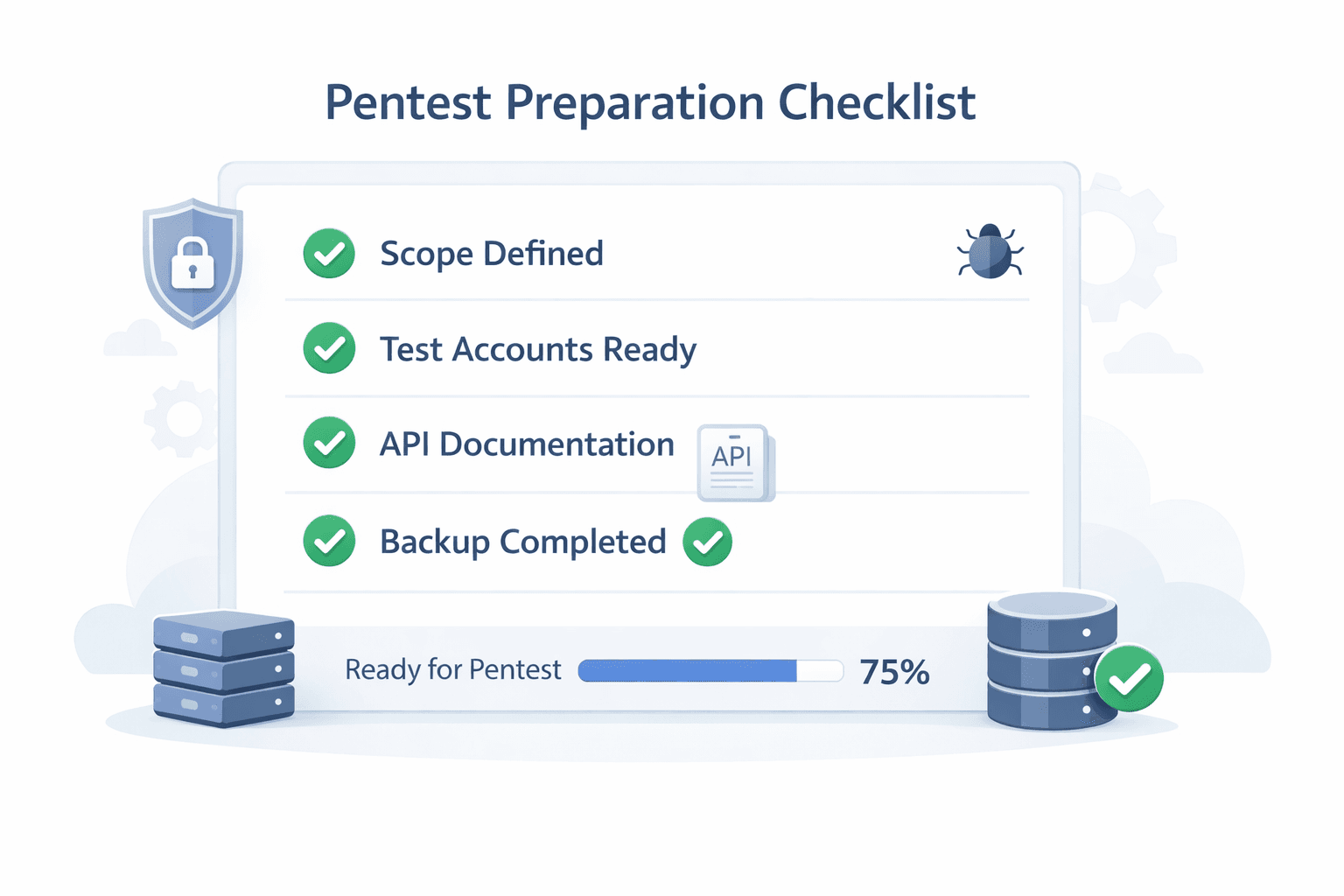
Quick Checklist
Before your pentest begins, confirm:
Scope is clearly defined
Testing approach is decided
Application is stable
Test accounts are ready
Documentation is shared
Rules of engagement are agreed
Tester access is whitelisted
Backup is taken
Point of contact is assigned
Retest is planned
A Common Pattern We See
Many startups invest in a pentest but treat it as a one-time activity.
They run the test, receive the report, and move on without fully addressing the findings.
The result is predictable: the same issues show up again later—sometimes during audits or after a real incident.
A pentest is most valuable when it becomes part of an ongoing security process, not a one-off task.
Final Thoughts
Preparing for a pentest doesn’t require a lot of effort, but it does require clarity.
If the basics are in place, testers can spend their time where it matters—identifying real risks instead of dealing with avoidable blockers.
That’s what ultimately makes the engagement worthwhile.

Company
About
Services
Contact
Contact
Email: himang@hemscyberguard.com